Paige Pan


Anti-Whaling Project Statement
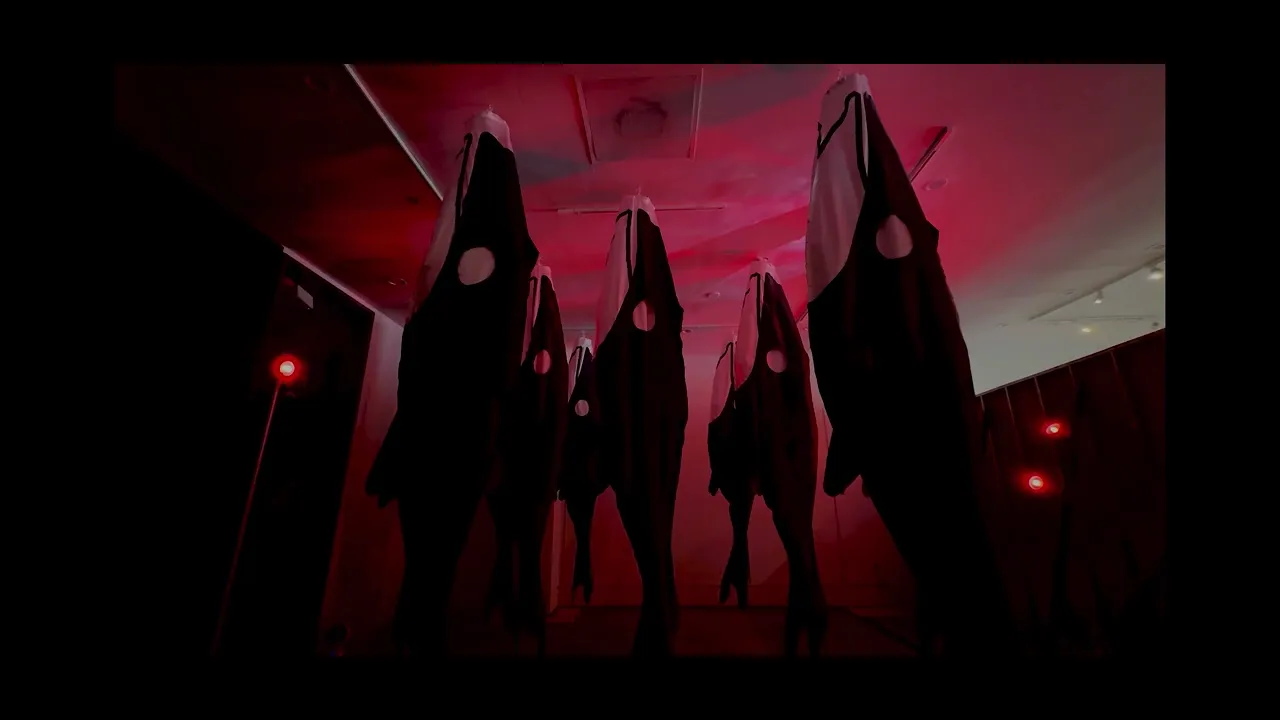
This immersive installation functions as a narrative trajectory in two parts, guiding the viewer from the visceral site of a slaughterhouse to the spiritual weight of a funeral. By subverting traditional Asian cultural symbols, the work explores the "long death" of whales—sentient giants whose suffering is often lost in the vastness of the sea.I. The Catch / The Silence of the Whales
The journey begins with a subversion of the Japanese koinobori (carp streamer). Traditionally a symbol of celebration, these textile forms are reimagined as slain whales suspended in a crowded frame of plunder. Whether viewed as a coastal harvest or a deep-sea massacre, the installation confronts the viewer with the gaping mouths and blank eyes of a species sacrificed to modern greed and unnecessary barbarity.II. 喪禮現場 (Funeral Site)
Emerging from the slaughter, the viewer enters a space of mourning and reckoning. This narrative diptych centers on a shrine to a fallen whale, interrupted by the manifestation of its own spirit. Clad in a Japanese avenge-ghost headpiece, the creature returns to demand accountability. Fusing traditional folklore with ecological activism, Funeral Site transforms the act of viewing into a confrontation with a ghost born of human violence.
Artist Statement
I began my career as a graphic designer in the advertising industry, honing the craft of visual storytelling. My practice has since expanded into large-scale ceramic sculptures and mixed-media installations that incorporate universal cultural symbols alongside elements drawn from Asian culture. This fusion allows me to deepen the emotional and narrative layers of my work.My whale series addresses three critical ocean issues: the cruelty of whale hunting, the global crisis of overfishing, and the need to protect endangered whales along the U.S. East Coast. Based in Colorado, surrounded by the Rocky Mountains, I seek to bring awareness of these oceanic threats to landlocked communities—inviting audiences far from the coasts to consider their roles in conservation.